Bathroom renovation: hygiene and functionality without complications
In recent years, bathroom renovations have moved beyond focusing solely on aesthetics. Today, the goal is clear: to create spaces that are easier to maintain, more comfortable for daily use, and better adapted to homes where every square foot counts.
So much so that recent renovation studies show that over 60% of bathroom projects prioritize accessibility and cleanliness over mere aesthetics. This reflects a growing demand for spaces that are easy to maintain without complex construction work.
The trend is no longer about adding elements, but simplifying. Eliminating unnecessary parts, reducing dirt traps, and improving hygiene without increasing the technical complexity of the installation.
Simplifying the space to improve cleanliness
One of the most frequent decisions in current renovations is to reduce the number of independent elements. The more pieces there are in a bathroom, the more joints, corners, and difficult-to-clean areas appear.
That's why many renovations opt for:
- Replacing bathtubs with walk-in showers.
- Installing shower screens without lower profiles.
- Using large format tiles with fewer joints.
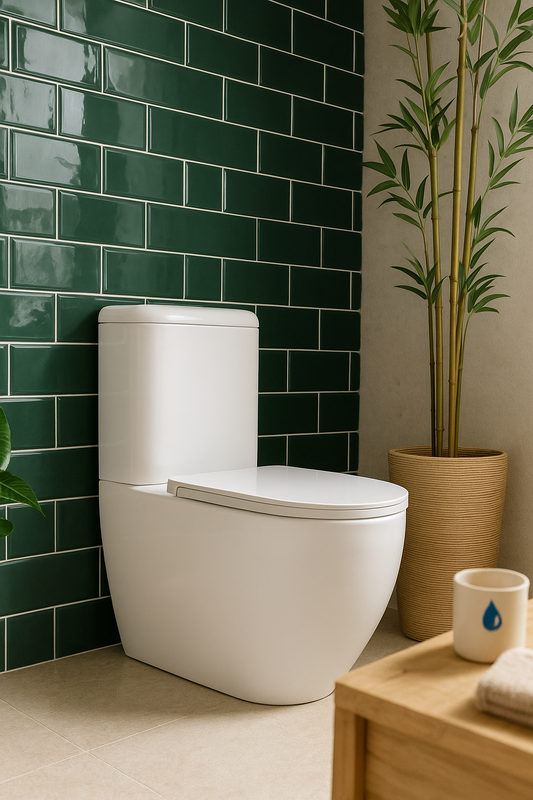
- Choosing toilets with enclosed lines and smooth surfaces.
The logic is simple: fewer visual interruptions and less accumulation of dirt.
Walk-in showers and visual continuity
The walk-in shower is not just an aesthetic matter. By eliminating steps and edges, areas where moisture, limescale, and soap residue accumulate are reduced.
Linear drains, ultra-flat trays, and minimalist screens allow for:
- Easier daily cleaning.
- Improved accessibility.
- Creation of a sense of spaciousness.
In small bathrooms, this decision completely changes the perception of the space.

Wall-hung toilets and clear floor space
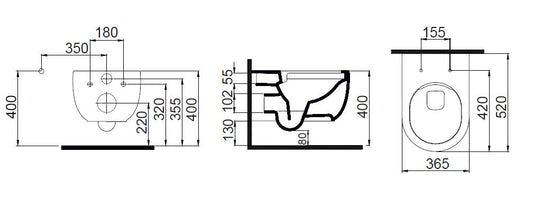
Another trend that directly responds to hygiene criteria is the installation of wall-hung toilets with concealed cisterns.
By freeing up the floor:
- The difficult-to-clean perimeter around the base is eliminated.
- Continuous floor mopping is facilitated.
- The accumulation of dust and dirt in corners is reduced.
Furthermore, by concealing the cistern within the wall, the overall visual appearance is simplified, reinforcing the sense of order that is so highly valued in today's renovations.
Integrating functions to avoid duplicating pieces
In urban homes, the traditional bidet is often one of the elements that most dictates the layout. It takes up space, adds another piece to clean, and in many cases is underutilized.
Some current renovations opt to integrate the hygiene function into the toilet itself. This solution allows for the continued use of water as a cleaning method without adding a second independent element.
In models that work solely with the existing water supply, installation does not require electricity or additional work. This facilitates its incorporation even in partial renovations, where excessive intervention in the bathroom structure is not desired.
Integration responds to a clear logic: maintaining functionality while reducing complexity.

Enclosed surfaces and design without nooks and crannies
Beyond the layout, the very design of the sanitary ware influences ease of maintenance.
Models with more compact shapes and continuous surfaces reduce:
- Hard-to-reach areas.
- Edges where dirt accumulates.
- Added external elements.
This type of simplified design is not just an aesthetic issue, but a practical response to a daily need: cleaning in less time and with greater efficiency.
Fewer joints, less maintenance
The use of large format porcelain tiles, microcement, or continuous surfaces drastically reduces the presence of joints. And fewer joints means less mold, less accumulated limescale, and less cleaning time.
Matte finishes and neutral tones also help to conceal water marks and fingerprints, keeping the bathroom visually clean for longer.
Contemporary renovation is not just about visual impact. It seeks real practicality.
Renovate with criteria, not with more elements
In short, the most coherent bathroom renovations are not those that incorporate more technology, but those that simplify decisions, and even costs. Reducing pieces, integrating functions, and facilitating daily maintenance are increasingly present criteria in well-planned projects.
The result is a more uncluttered, more functional, and easier-to-maintain bathroom over time.